
Basement Addition Bath.
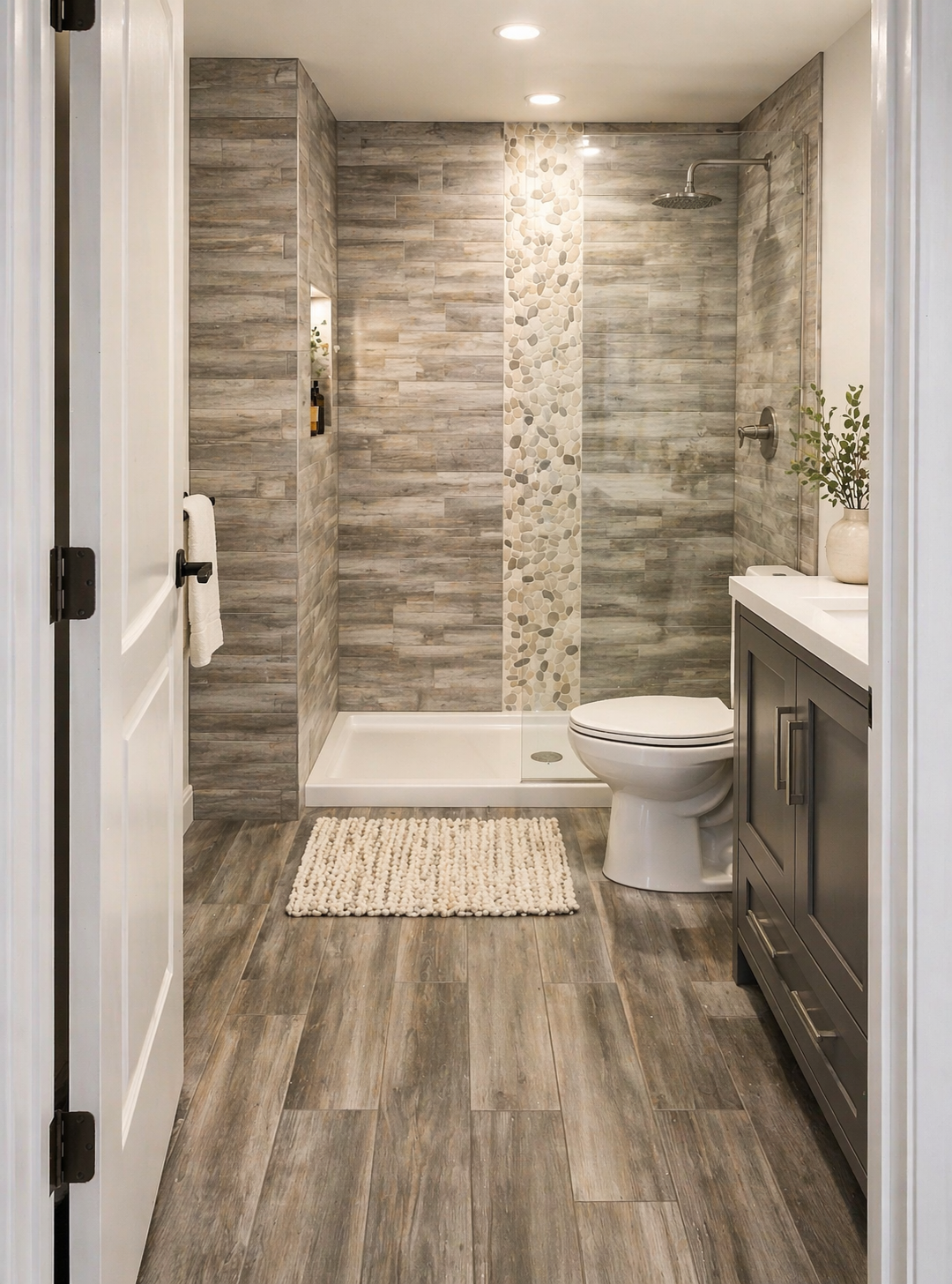
A bathroom for the basement hangout.
A finished basement in Long Island. A family hangout space — TV, games, a couch, the kind of room where people go to actually relax. What the basement didn't have was a bathroom, which meant running upstairs every time. The ask was simple: add one.
No renovation. No demolition. Just a well-built new bathroom in a space that didn't previously have one. The job was sized for two weeks. On budget, on time, done right.
What's behind the finish matters more than the finish.
A bathroom looks good for a day. It works for thirty years. The difference between the two is what you can't see after the tile goes up.
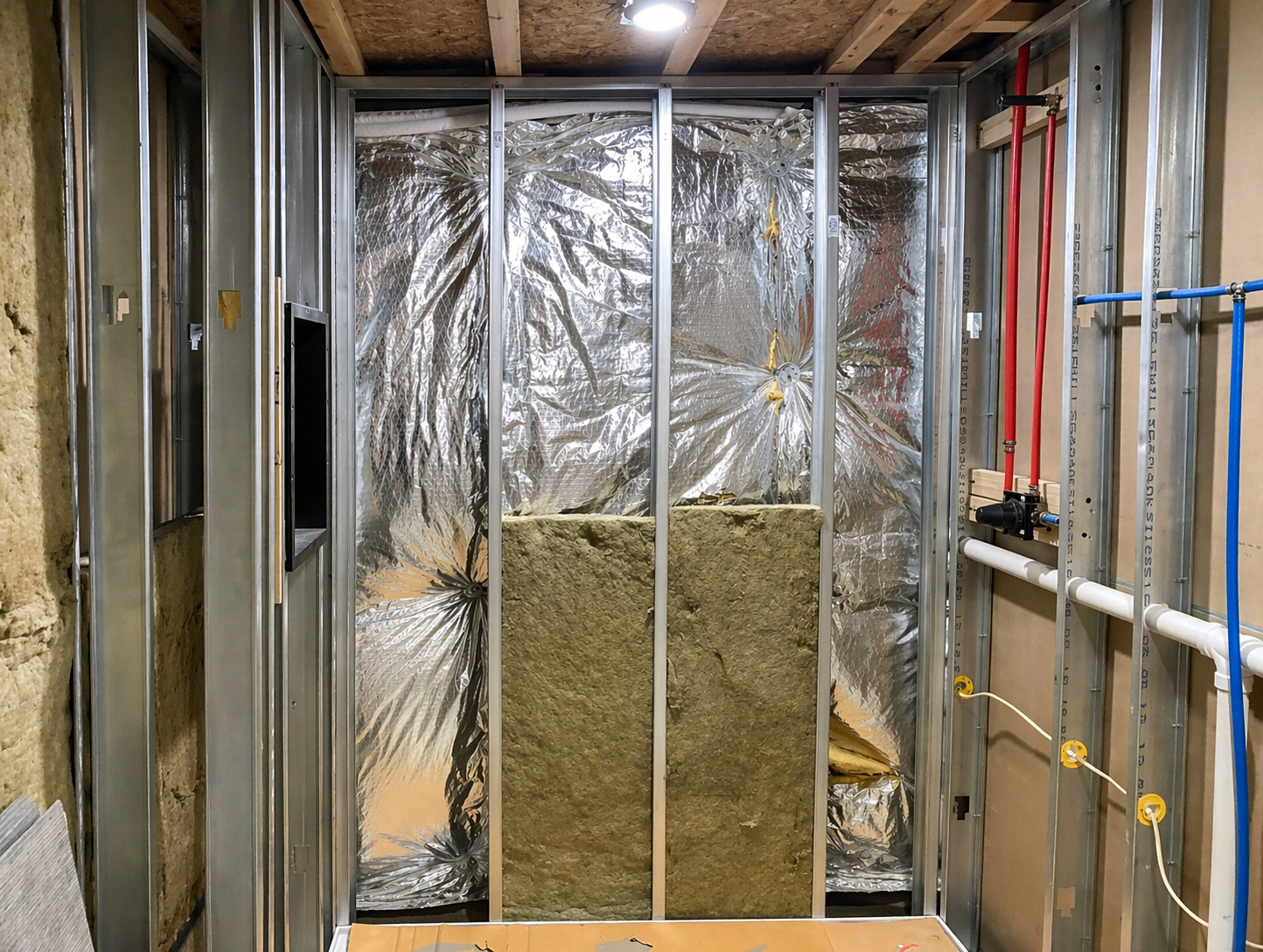
This one is framed with steel studs — lighter, straighter, and moisture-resistant in a way wood studs will never be, which matters for a below-grade space. Between the studs, rock wool sound insulation. Bathrooms in finished basements share walls with living spaces; proper insulation means the family room doesn't hear the shower, and the person in the shower doesn't hear the game.
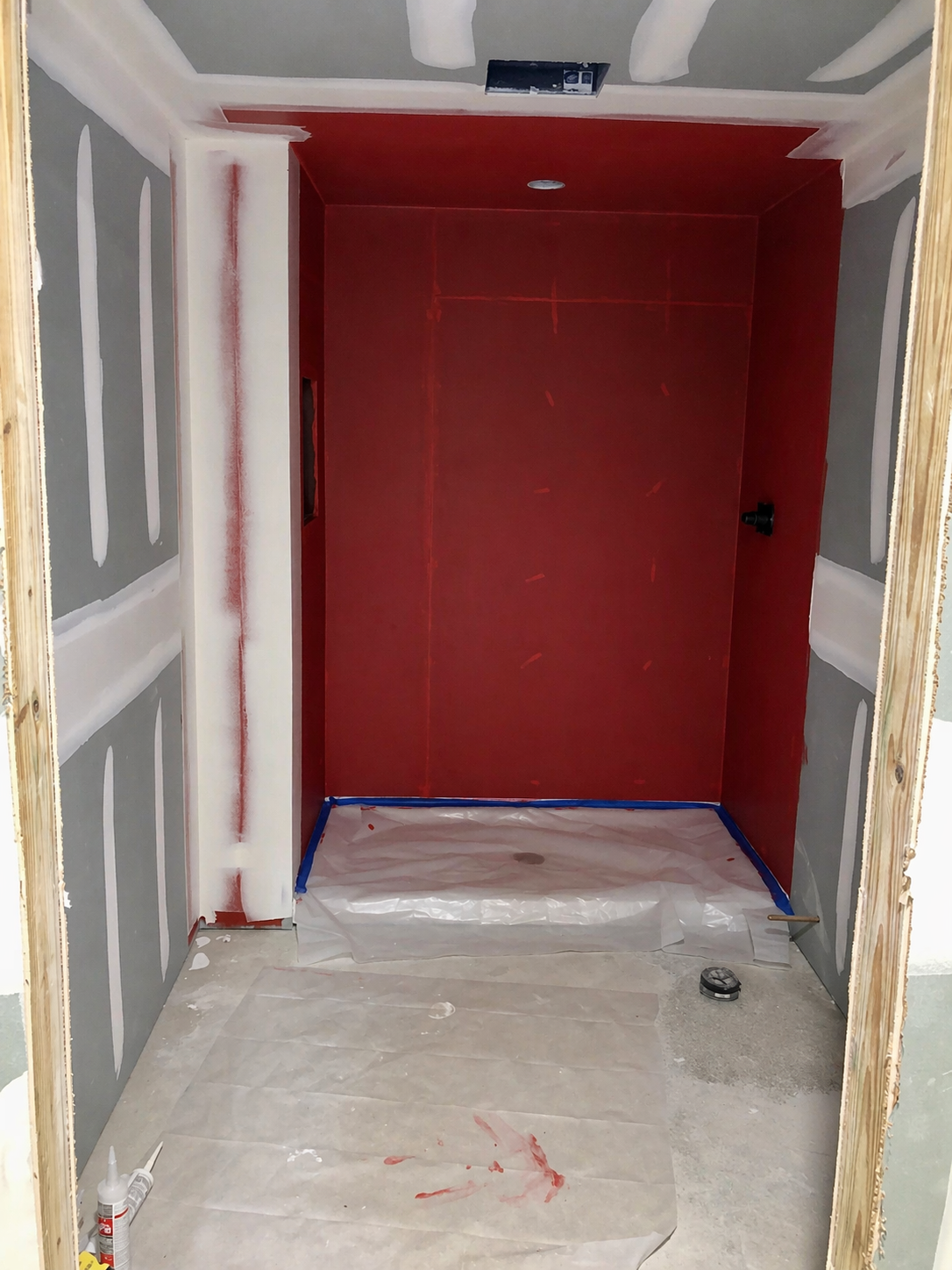
For waterproofing, we used a standard membrane system rather than the full-envelope Schluter setup we spec on projects with real consequence exposure. Schluter is the right call when a bathroom sits over a crawl space or a finished living area, where a hidden leak can rot the structure. This shower sits over a poured concrete slab on grade. There's nothing below it to damage. Standard waterproofing, installed correctly, does the job.
That judgment call is worth calling out. A lot of the cost differential between contractors is in over-speccing work that doesn't need the upgrade — and under-speccing work that does. The answer in both cases is the same: match the system to the risk.
Clean. Utilitarian. Quietly finished.
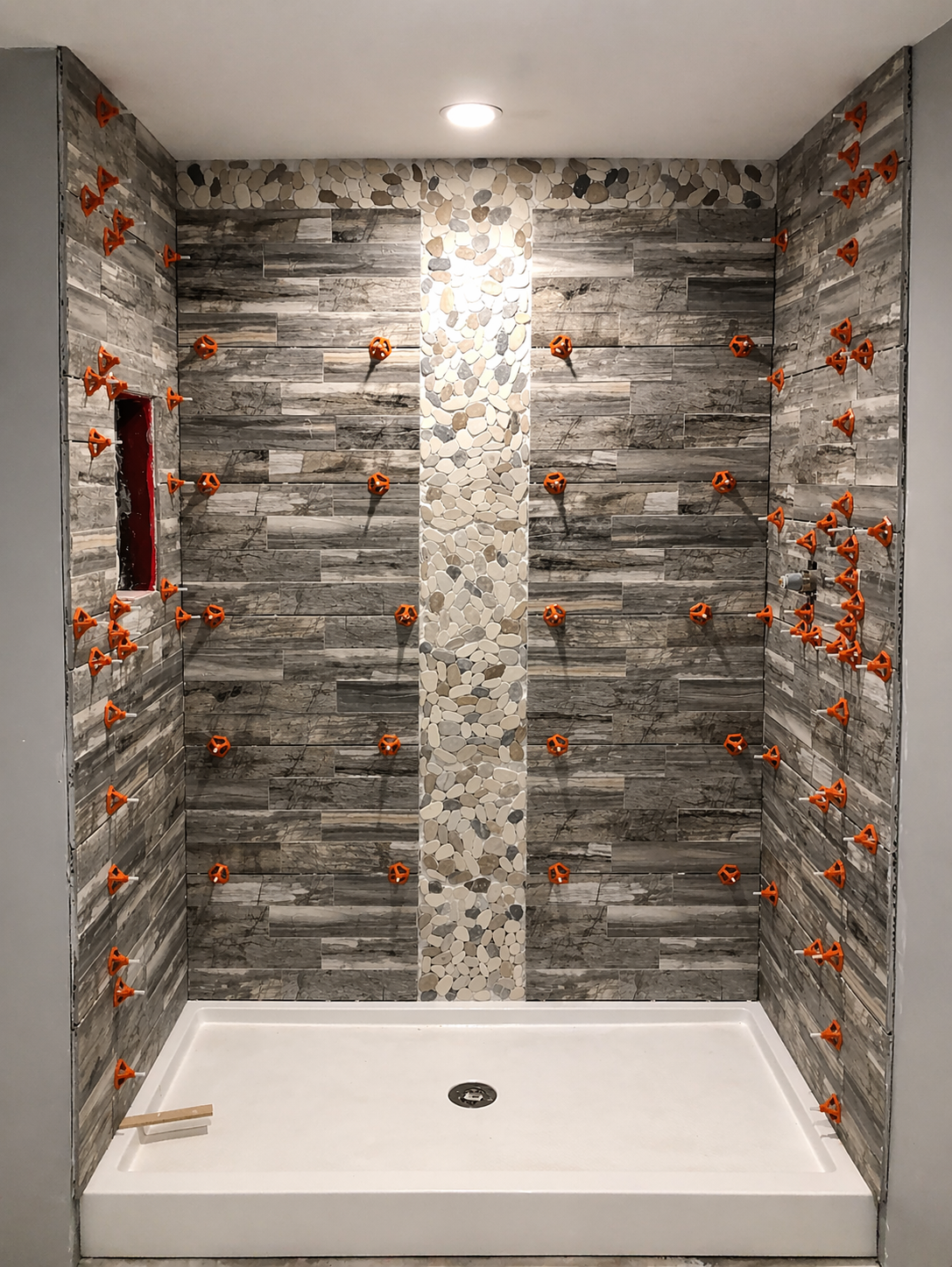
A wood-look porcelain on three walls, run vertically to stretch the ceiling height. A pebble accent stripe runs floor-to-ceiling behind the showerhead — one small moment of texture in an otherwise restrained room. A recessed niche for shampoo and soap, so nothing lives on the ledge. Shaker vanity in dark grey with brushed chrome hardware, keeping the footprint tight and the finishes consistent.
The shower pan is a pre-formed acrylic base rather than a custom-tiled pan — cleaner install, easier maintenance, and exactly the right call for a bathroom that will get ten times the casual use and zero spa moments. The rug, the towel, the single plant on the vanity: those came with the photo shoot, not the build. But the build is what makes them possible.