
Modern Farmhouse Master Bath.
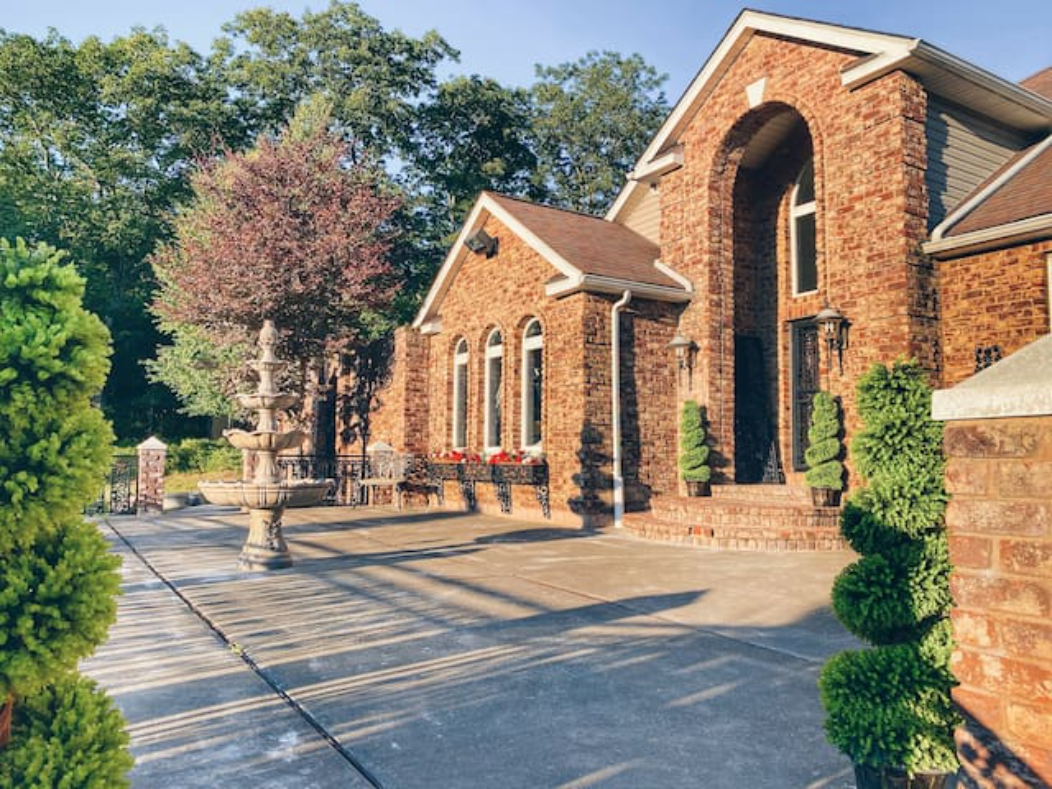
A Tuscan daydream, stuck in 2007.
New owners. A 2007 Italian-villa-style vacation home in the Poconos — brick arches, tiered fountain, wrought-iron entry, topiaries. The kind of house that looks like Tony Soprano might have built it for his mother. The new owners bought it intending to strip out the old-world heaviness and bring the interiors forward by two decades. Specifically: a modern farmhouse vacation home, light and airy, the kind of place where you actually want to spend the weekend.
The master bathroom was the project that would set the tone.
What they wanted. What they pointed to.
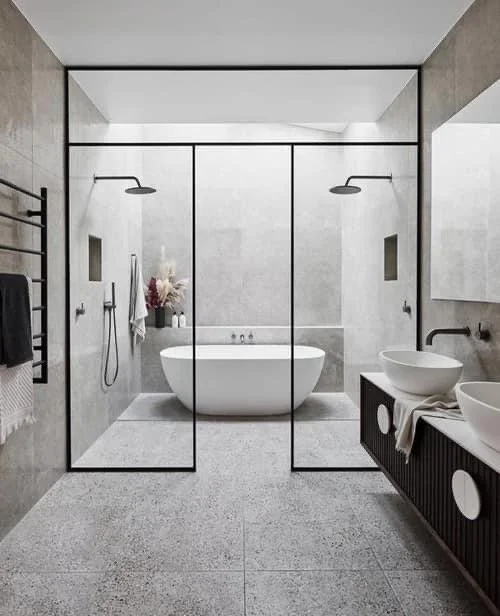
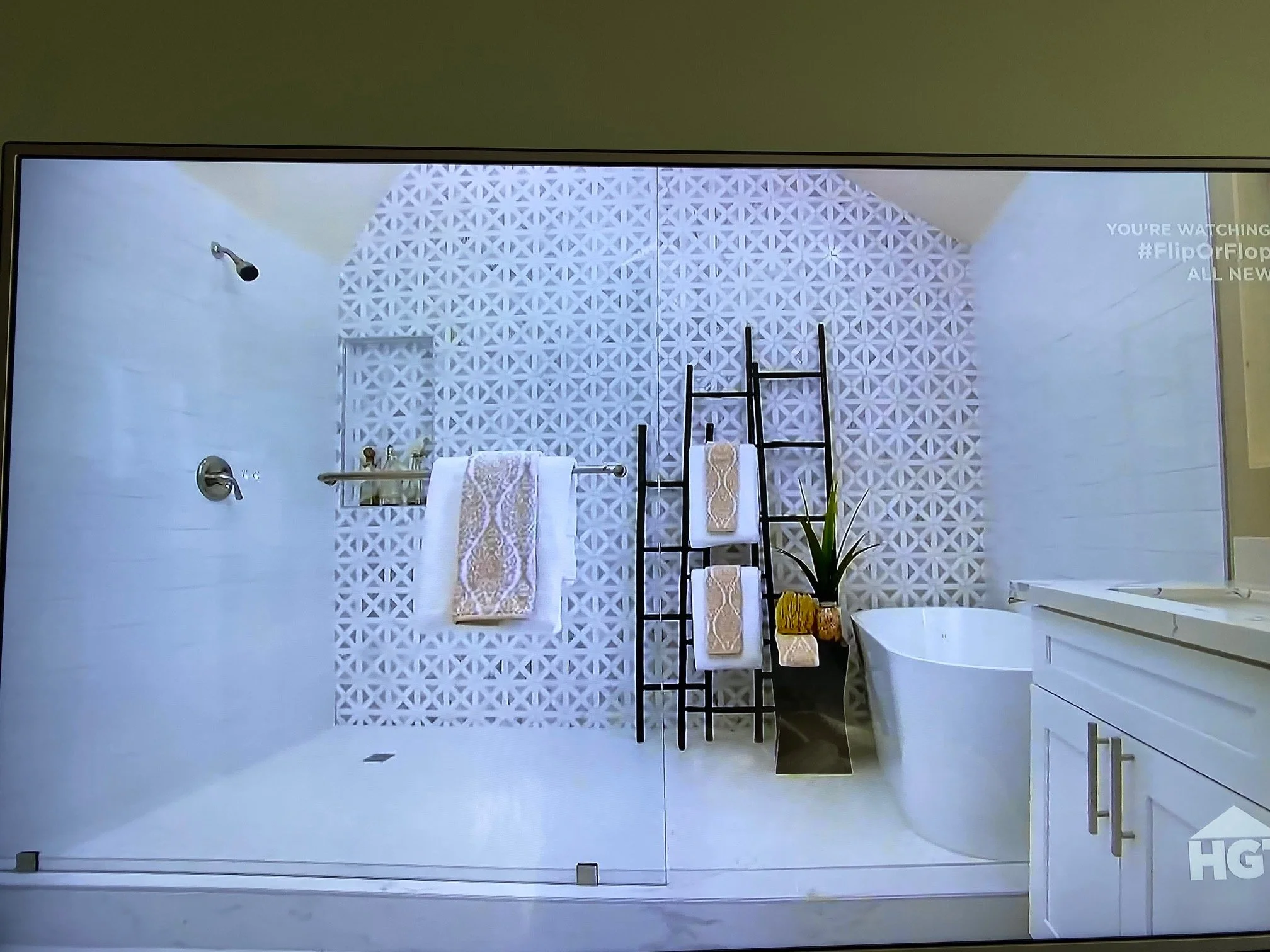
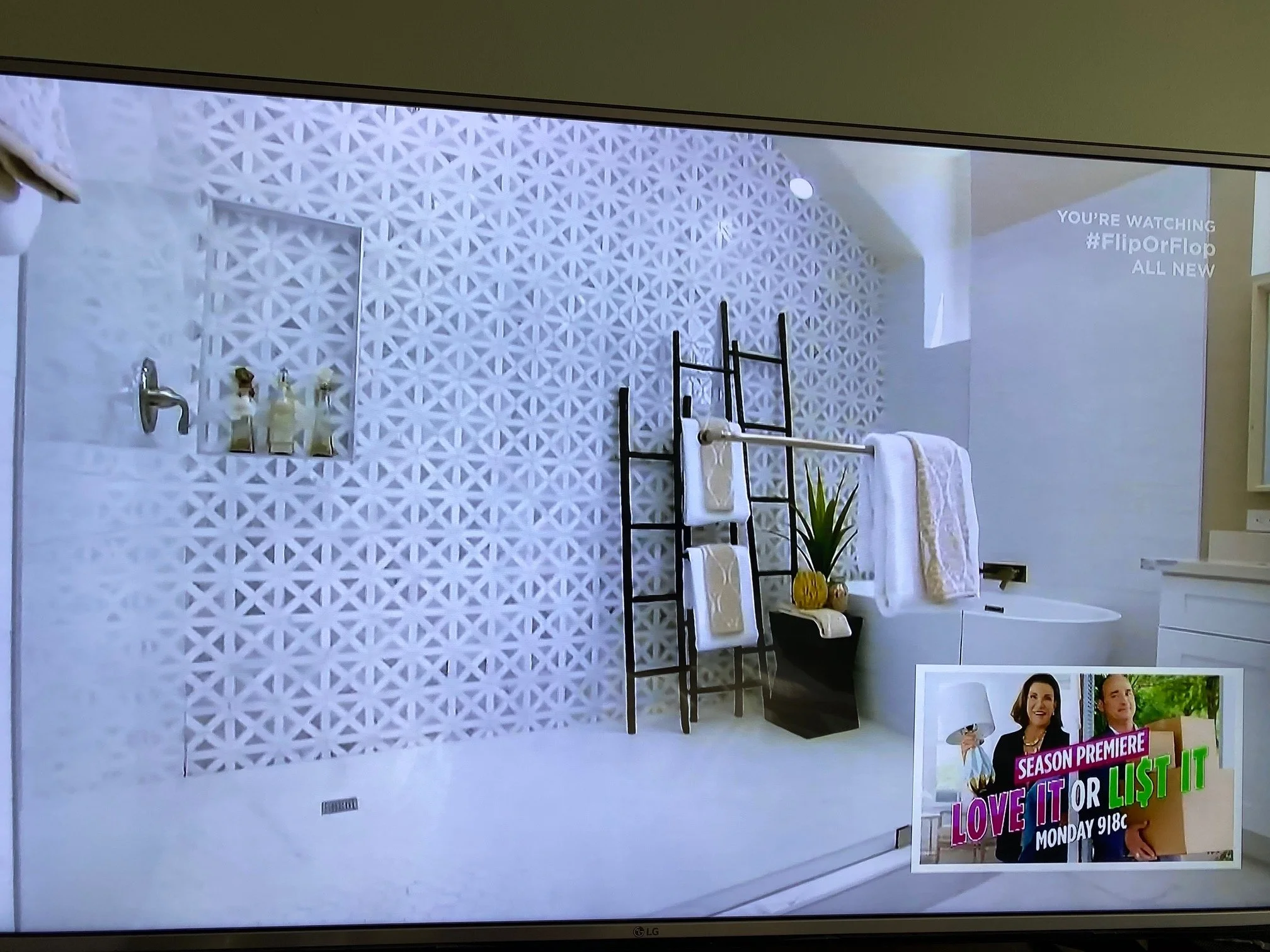
The owners showed up with a design language they could articulate clearly. A wet room. A freestanding tub. Pattern on one wall. Warm wood floors. Matte black fixtures. They had specific references — one polished interior-design rendering, and two screenshots they'd taken of their TV during episodes of Flip or Flop.
Most inspiration references come filtered through Pinterest. These came from the actual moments they'd seen something and said "that one." Honest material to work from.
What modernization looked like in 2007.
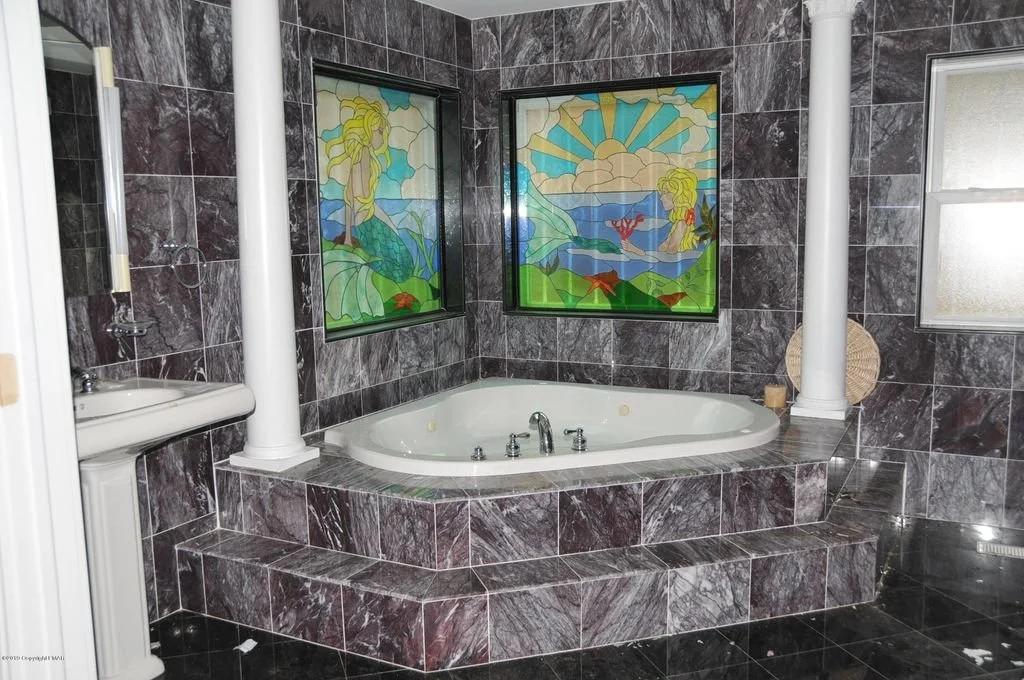
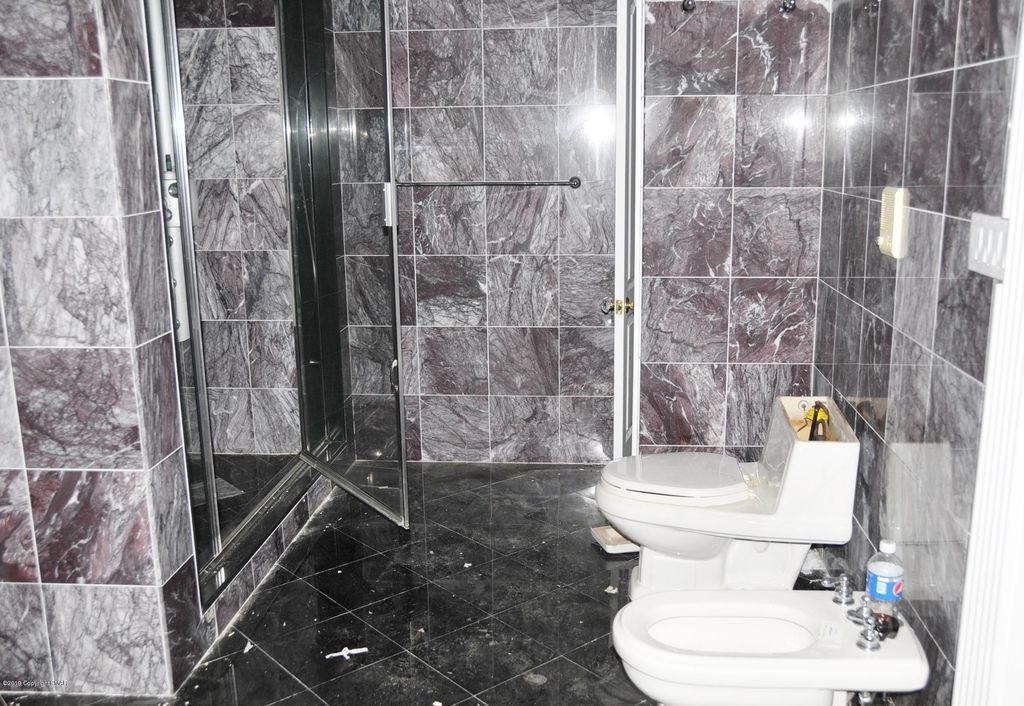
Dark grey-and-purple-veined marble-look tile, floor to ceiling. A corner jacuzzi flanked by Roman columns. A bank of stained-glass mermaid windows looking into the tub. A separate glass-enclosed shower with a matching marble envelope. Whatever language this was, it wasn't the one the new owners wanted their vacation home speaking in.
Two surprises, one bathroom.
This project was supposed to take five or six weeks. It took eight to ten. The reason it took eight to ten is the reason this is the project I most want people to see.
Surprise one: the tile was marble.
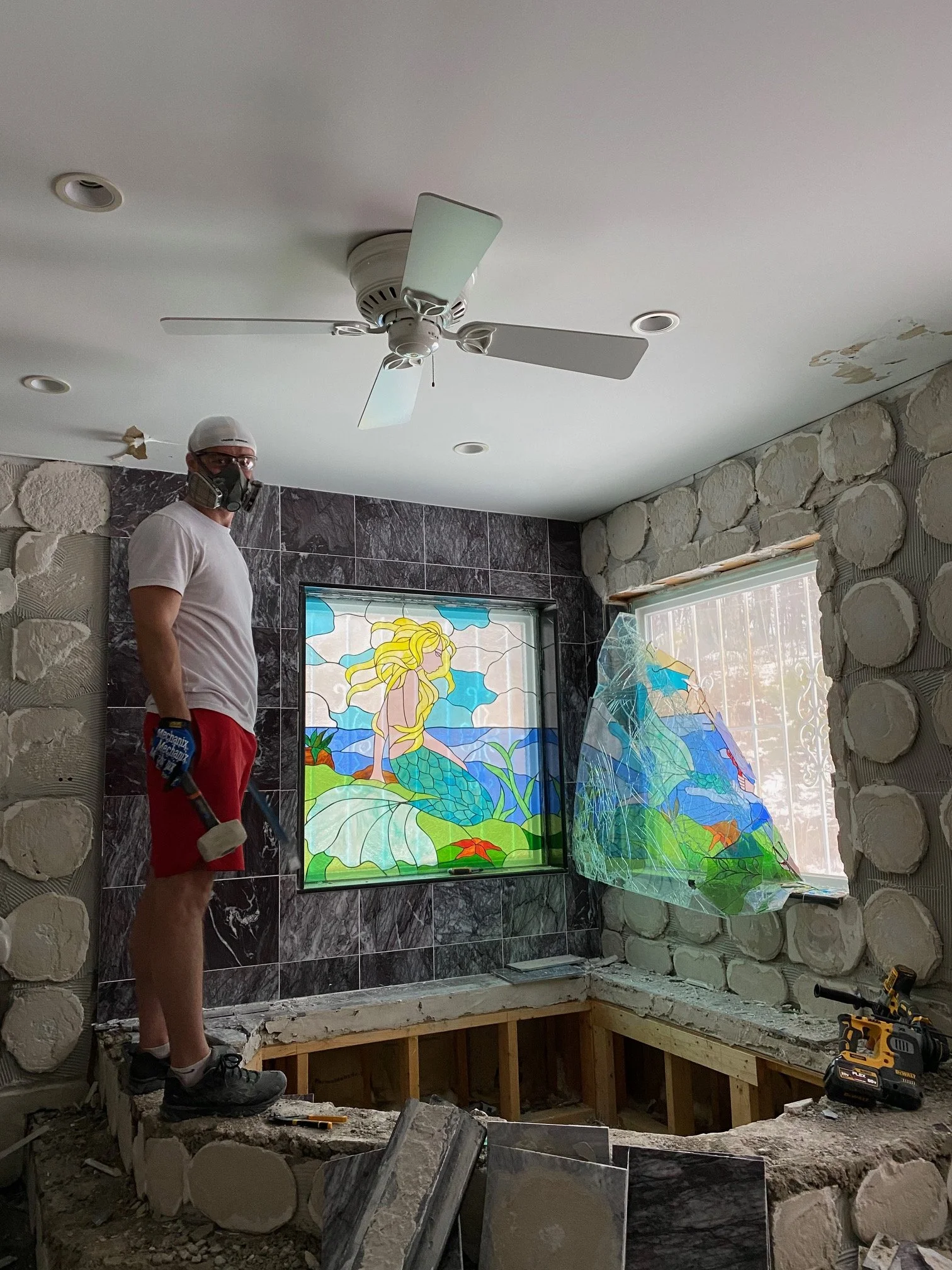
We started demolition assuming the envelope was porcelain tile — standard stuff, comes off in a day or two with the right tools. Once we got into it, we realized what we were actually looking at: a full one-inch slab of real marble, set over roughly five inches of concrete mud bed. Not tile. Architecture.
The first instinct was to pause. Real marble isn't something you take a sledgehammer to lightly — even dated marble is still marble. But the homeowners' goal was a light, airy, modern farmhouse bathroom, and no version of that goal included keeping a dark-purple-veined marble sarcophagus in the corner. So we committed. One extra week of demo just to get the "monument" out of the room.
Surprise two: the house was failing.
With the marble finally out and the room stripped to the framing, something worse revealed itself. The bathroom was on the first floor, sitting directly over the crawl space below — and there had been a long-standing hidden leak, invisible from inside the house, quietly soaking into the crawl space for years. By the time we saw it, the damage was extensive: the subfloor was fully rotten, and one of the joists supporting the bathroom had gone with it.
This wasn't a finish problem. This was a structural problem. A first-floor bathroom sitting under an inch of real marble and several inches of concrete mud bed is a lot of weight. A rotted joist underneath that weight is how you get a bathroom floor that eventually gives way. The homeowners didn't have a dated bathroom. They had a failing house. They just hadn't opened the right wall to find out.
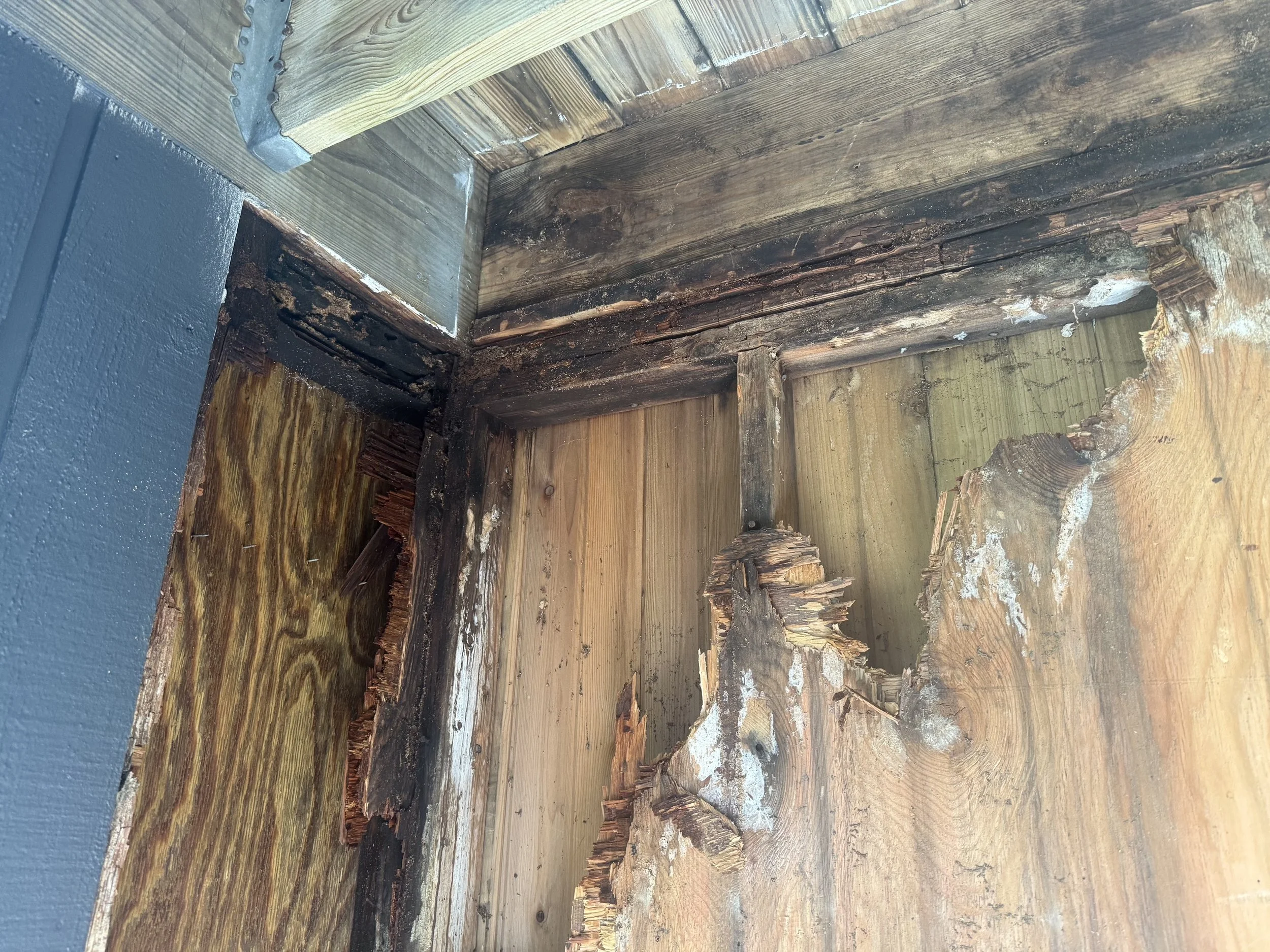
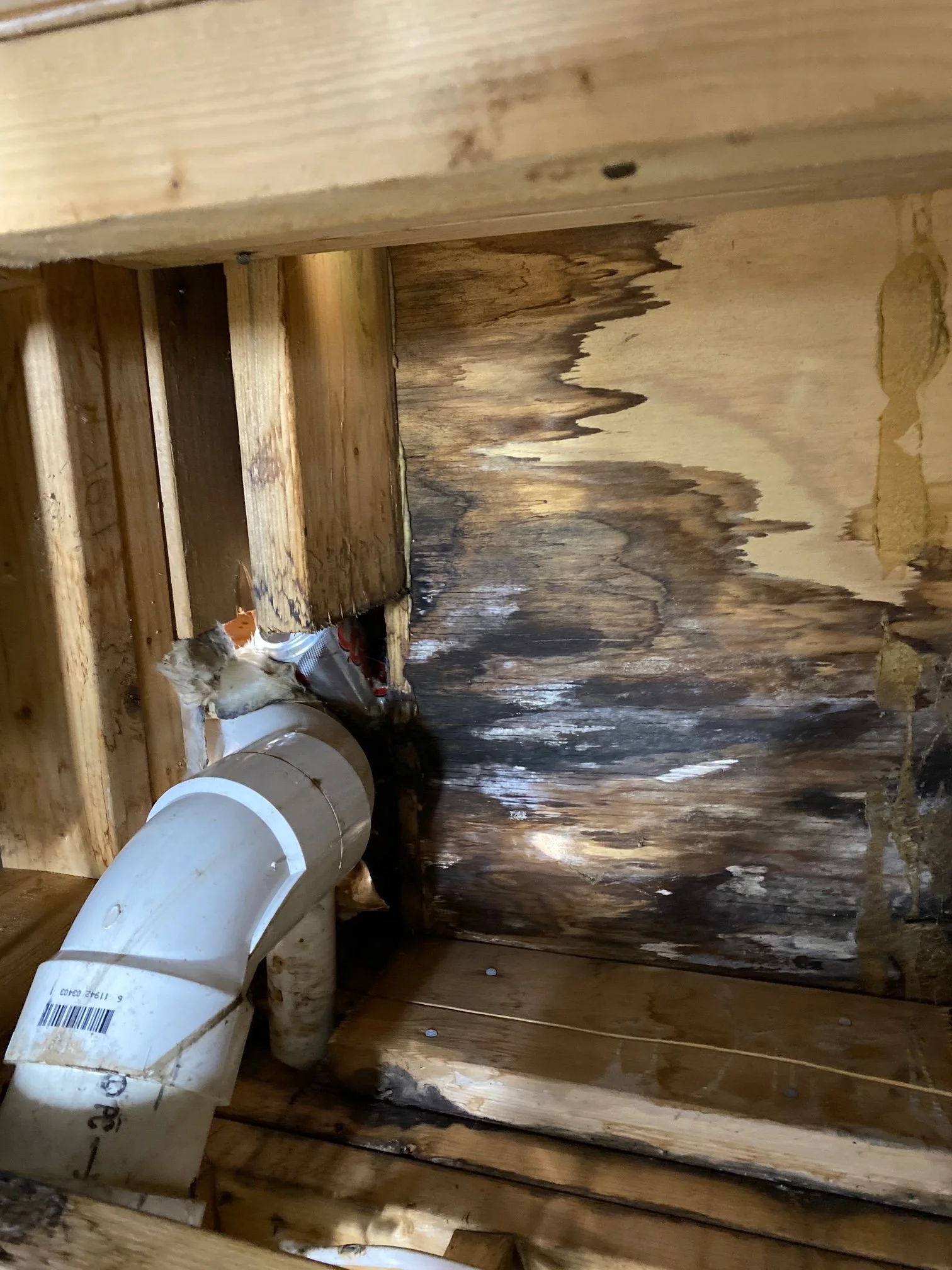
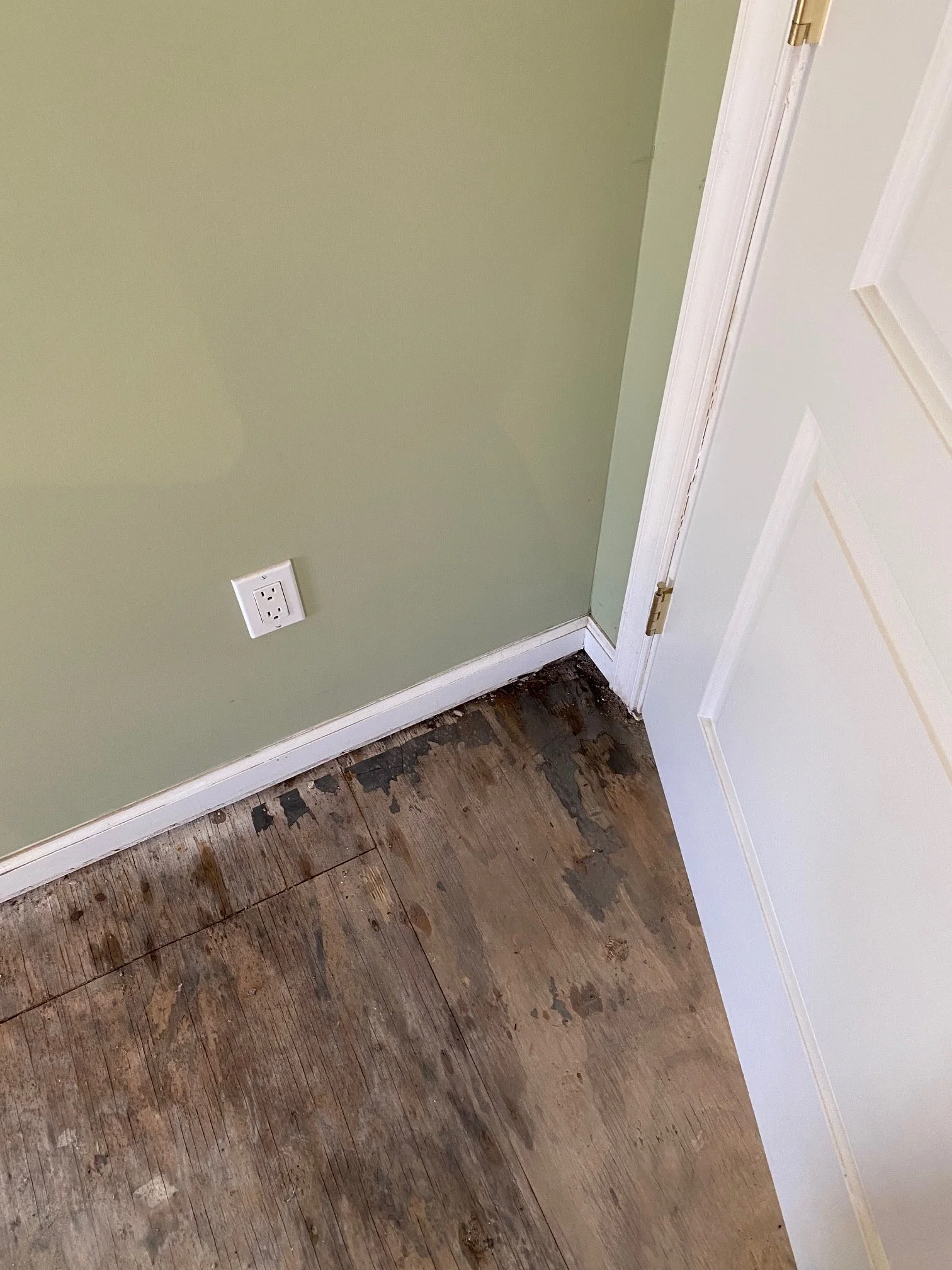
Fixing the rot meant taking down two walls to access the subfloor and joist structure. We marked the walls with tape and called the owners.
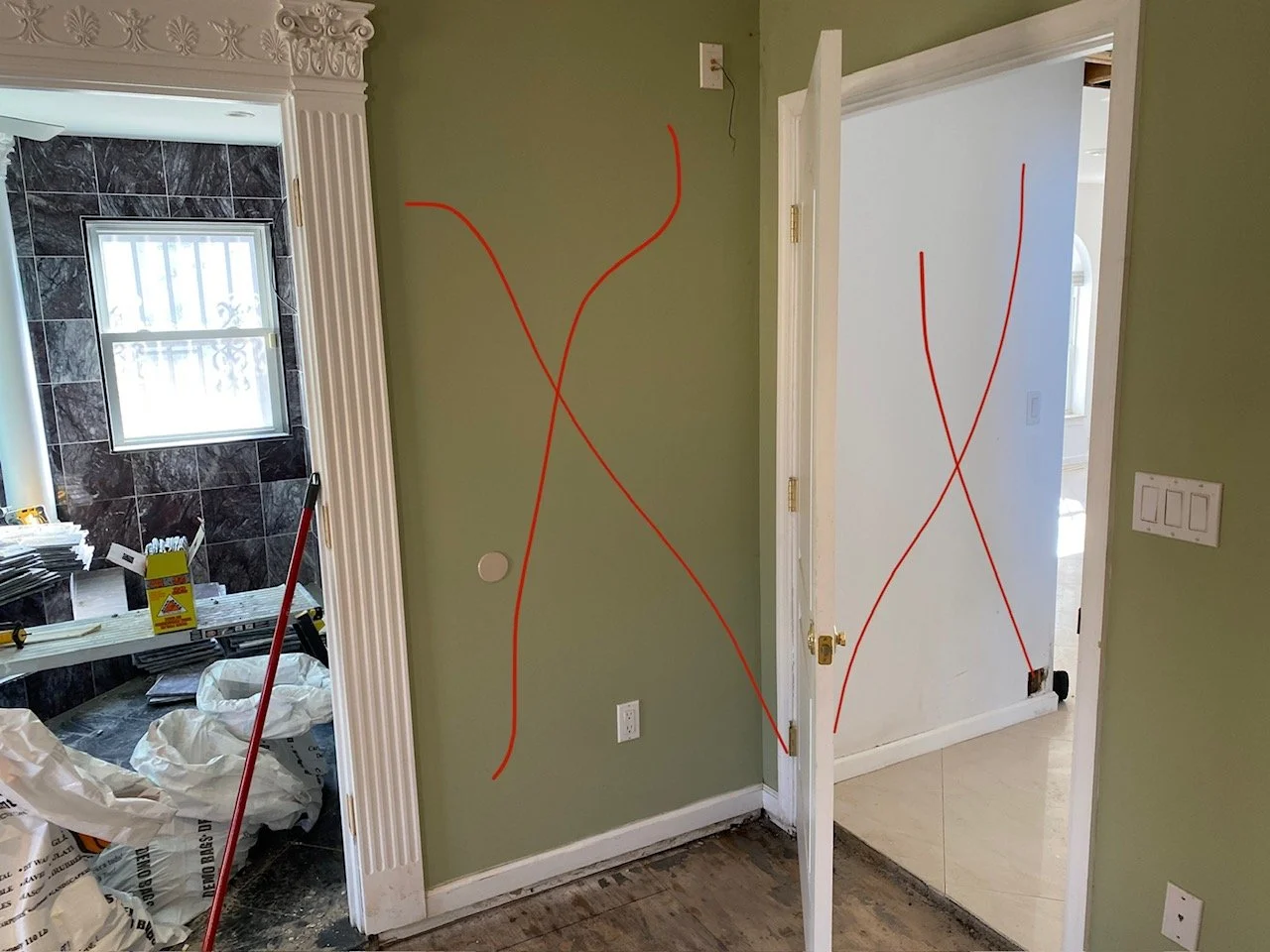
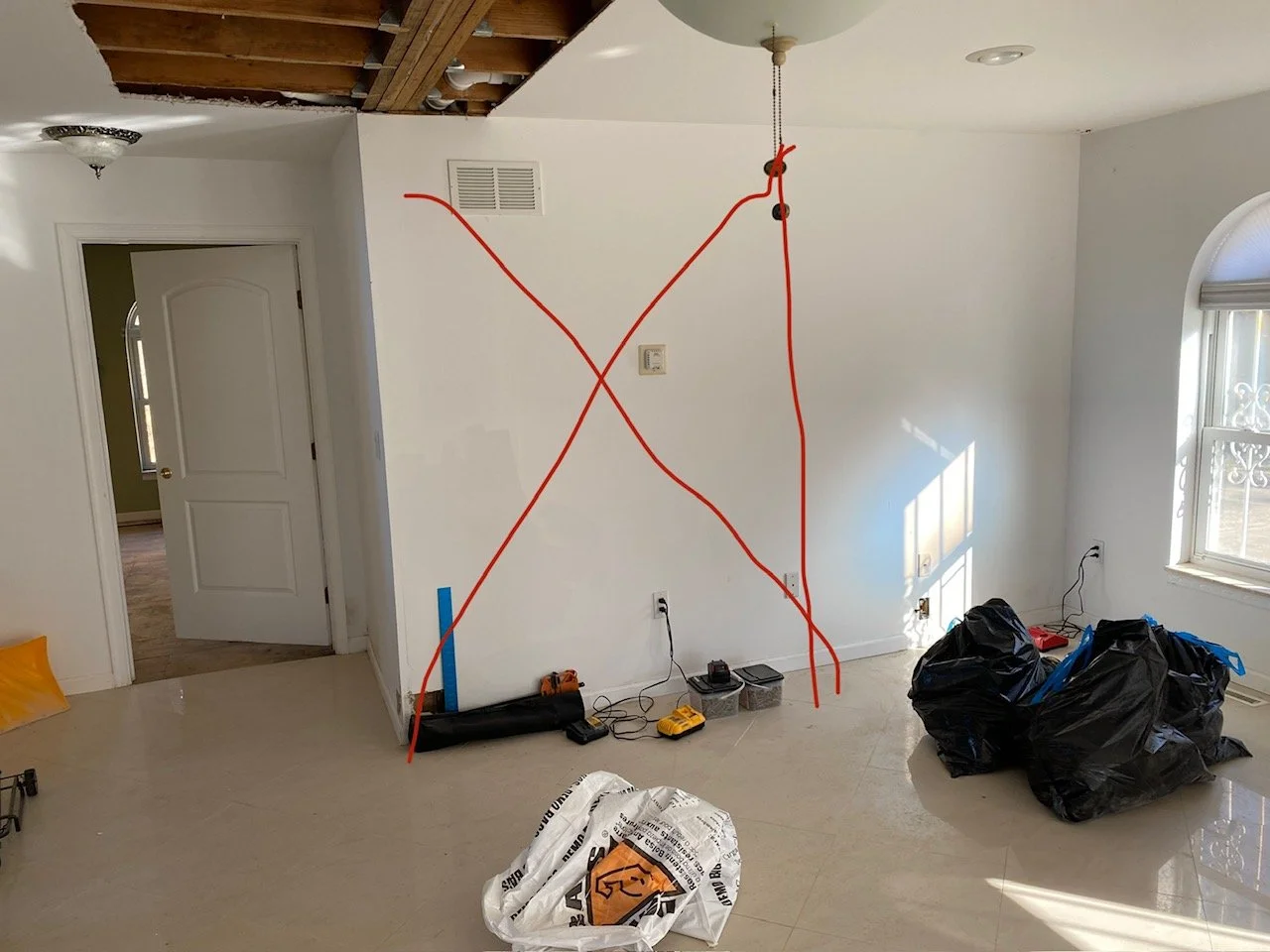
"Fix it. Tell us the number."
— The owners, from 100 miles away
The owners were 100 miles away and it was the spring of 2020 — the world had just shut down and nobody was travelling. They were seeing everything through photos and phone calls.
The decision could have gone several ways. They could have asked us to document the damage and wait. They could have asked for a second opinion. They could have pulled scope and patched the rot cosmetically. What they did instead was take a breath, trust the assessment, and ask what it would cost. We sent a revised number. They approved it. We started opening walls.
From the framing out.
New joist. New subfloor. Framing adjustments to square up the room for the new layout. By the time the bathroom was ready for finishes, the house was structurally healthier than it had been in years.
The waterproofing system we installed this time around was Schluter — a full membrane-and-bonding-flange system that wraps every seam, every penetration, and every corner of the wet zone. It's the standard we spec on every bathroom where we don't want to ever get a call back. This bathroom won't leak again.
Everything above that — the tile, the fixtures, the vanity, the lighting — was the part that was supposed to take five weeks in the first place.
Light. Airy. Quietly grounded.
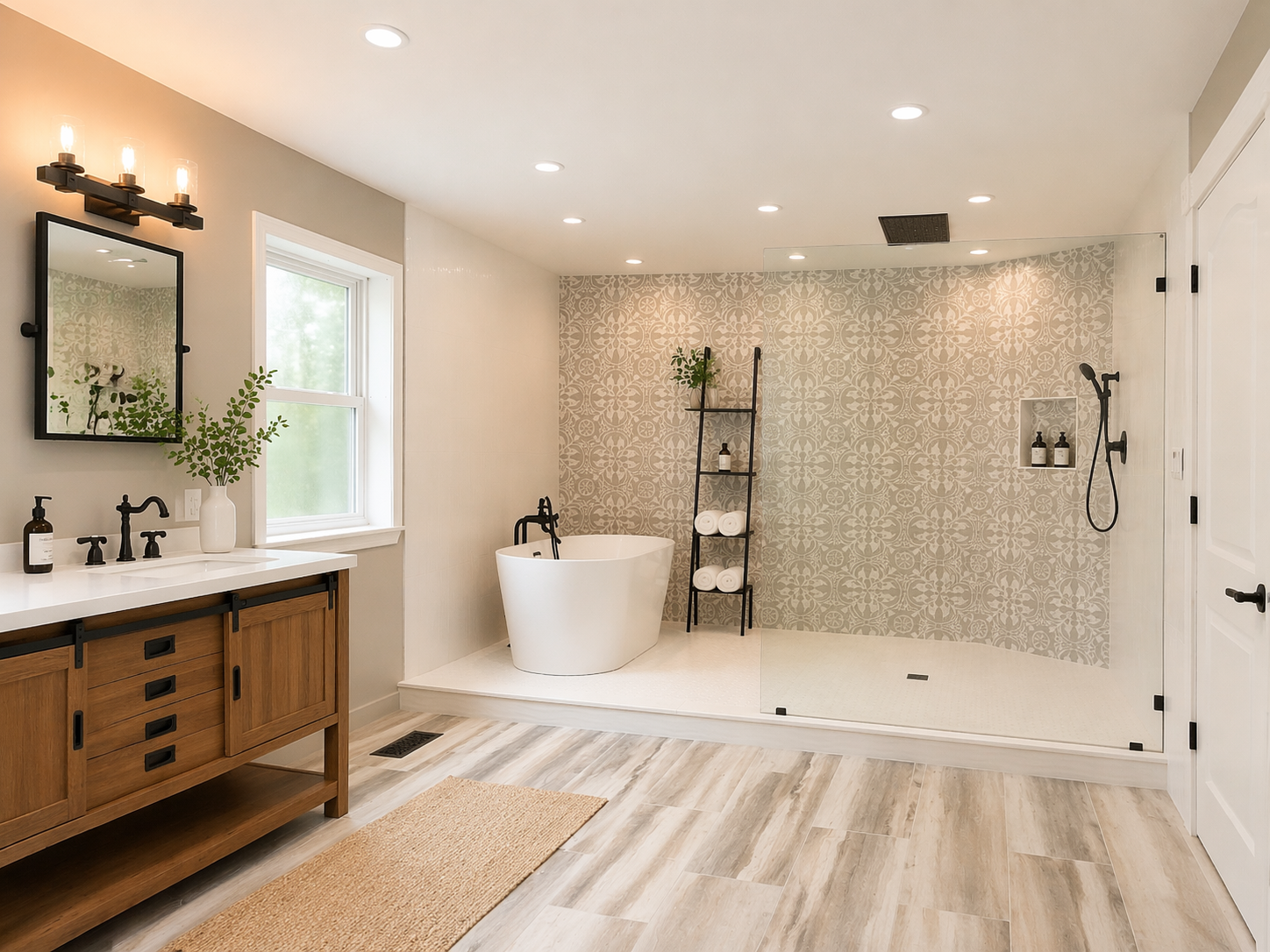
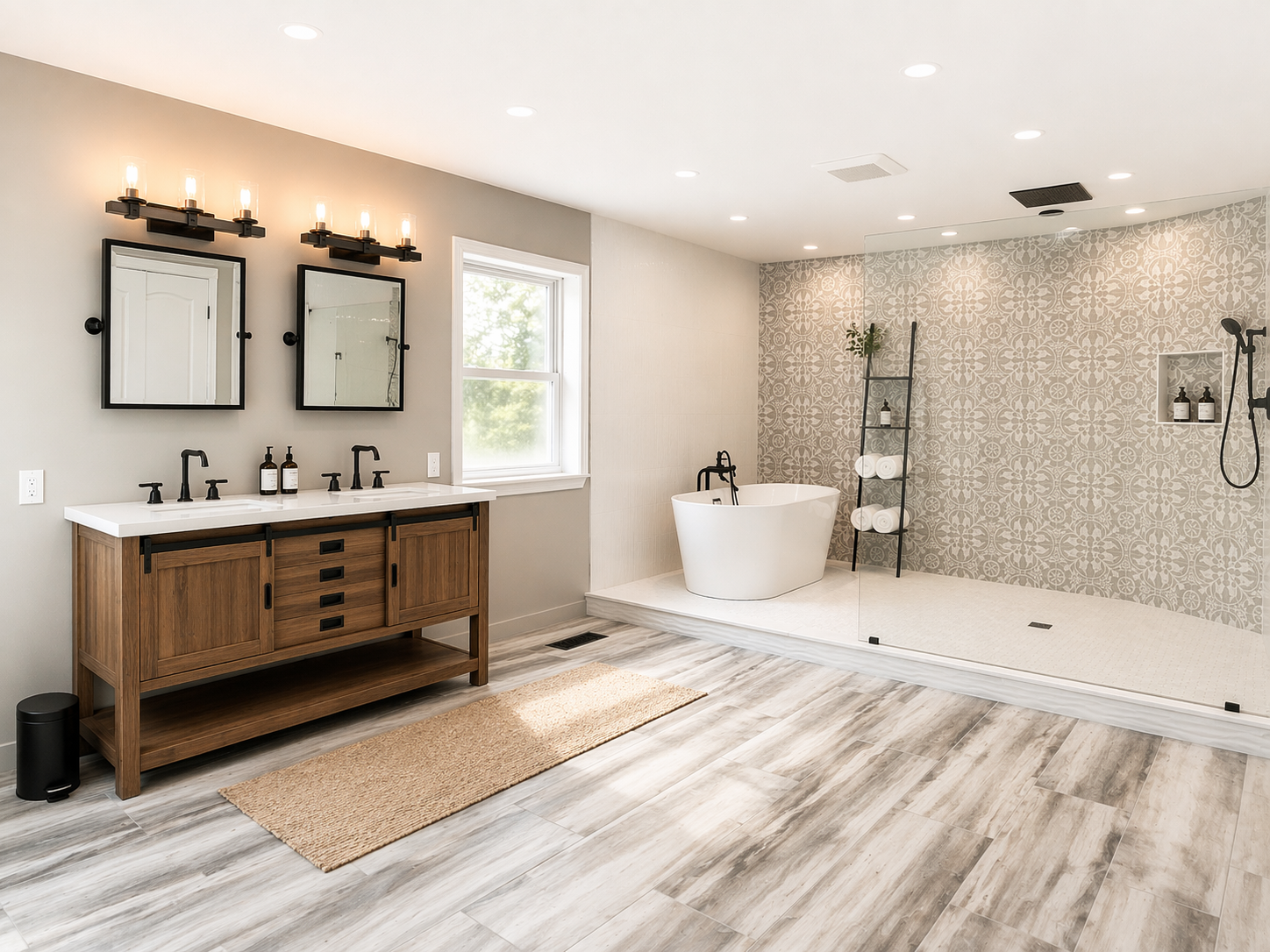
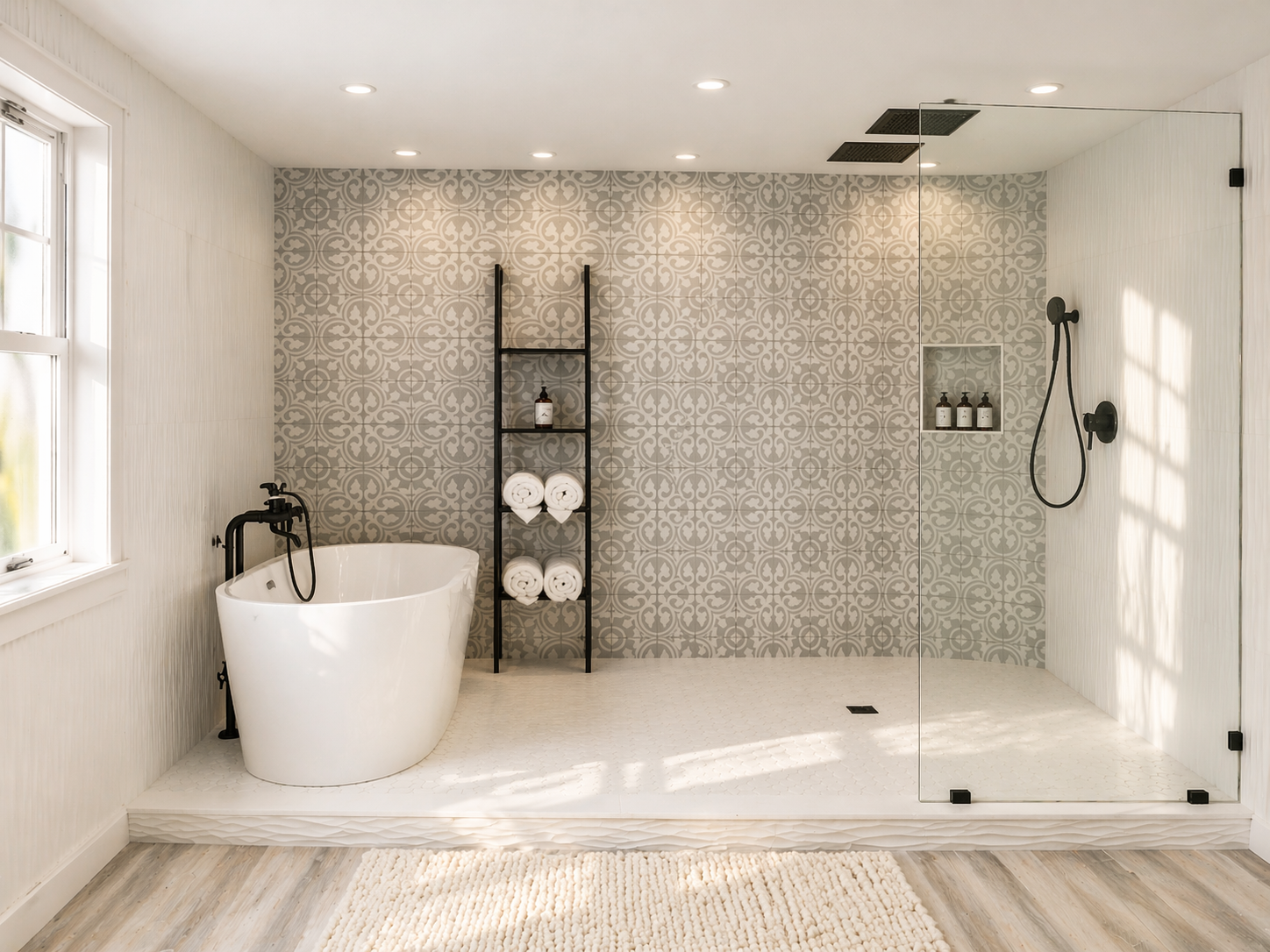
A wet room occupies the far wall — the freestanding tub and the shower share a single open, curbless zone, separated from the rest of the room by a glass panel. The feature wall behind them is a patterned porcelain that nods to the farmhouse references without tipping into theme-park. Wood-look porcelain floor runs continuous from the vanity through the shower — warm underfoot, waterproof under reality.
The vanity is a deep walnut-tone double with quartz counters, a thin profile so it doesn't visually crowd the room, and an open lower shelf that keeps the footprint reading light. Matte black plumbing, matte black sconces, matte black pivot mirrors: one hardware finish, used consistently, does the work of ten smaller coordination decisions.
And above the shower, twin rain showerheads — the detail that turns "nice bathroom" into "spa at home." Two rain heads, side by side, mean the shower zone works as a two-person shower or as one long warm wall of water. It's the moment the brief fully lands.
The project that almost wasn't.
The bathroom took eight to ten weeks instead of five or six. The owners never once saw it in person while it was open — they were a hundred miles away, in a country that had just locked down, watching photos roll in from a job site they couldn't visit. When it mattered, they approved a revised number and let us do what needed doing.
What needed doing turned out to be more than any of us knew when we started. A dated bathroom became a rotten subfloor became a failed joist became two walls down became a house that is now, genuinely, fine — for another forty years at least.
This is the project I send to anyone asking why renovation work is worth paying for carefully, by people you trust, rather than cheaply, by people you're hoping will do the right thing when no one is looking.