
Fireplace Resurface.
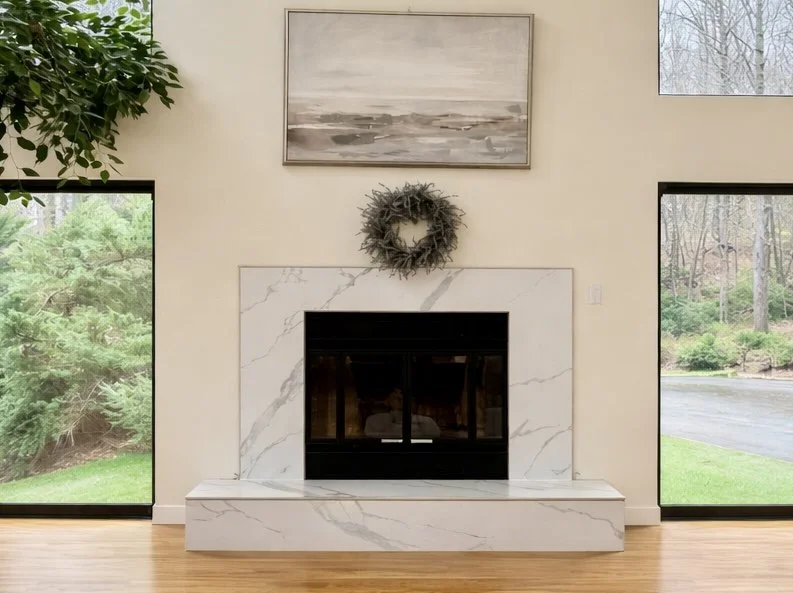
A fireplace from another decade.
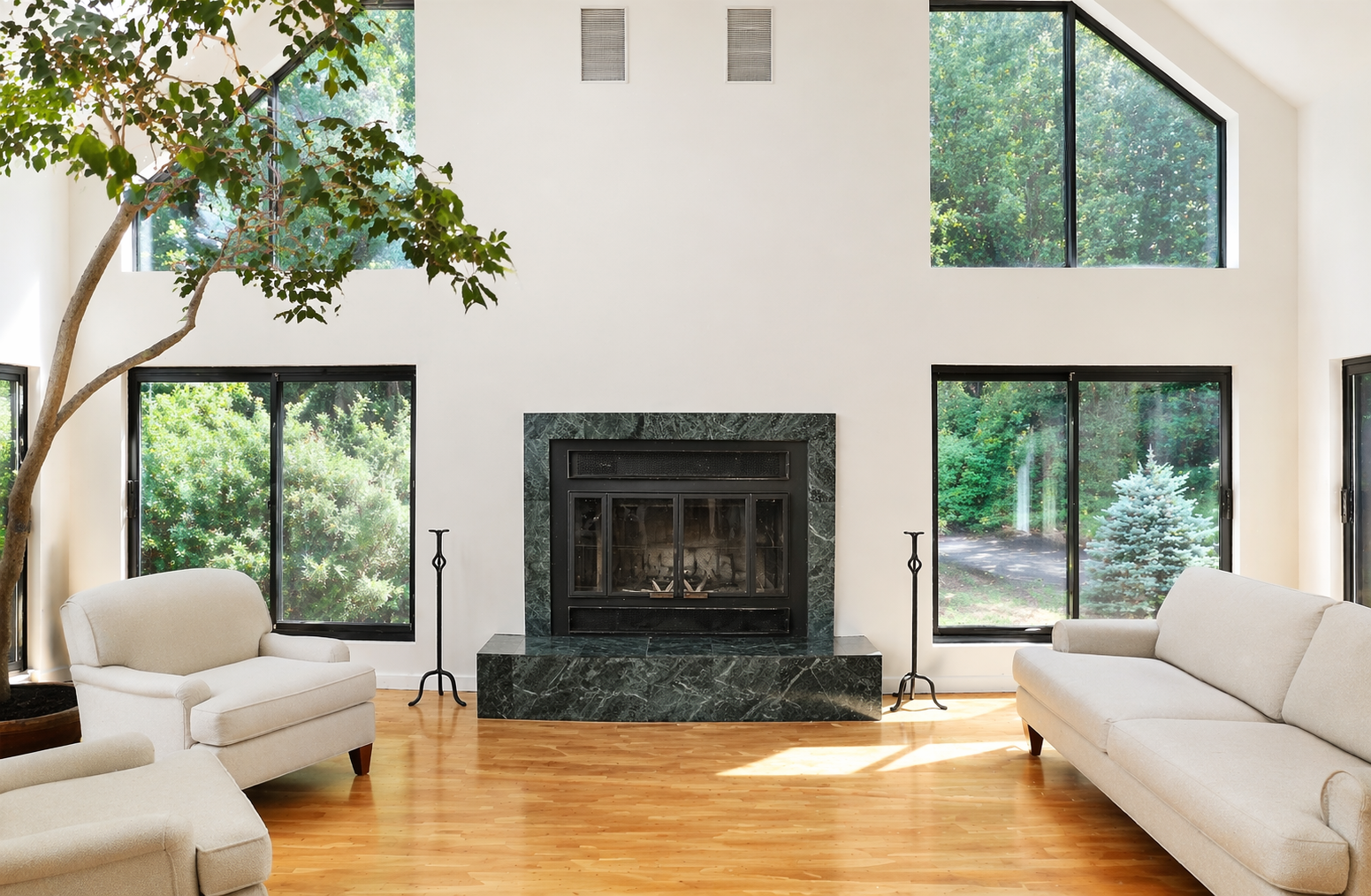
A contemporary home in Westchester, built in the nineties. The house had aged well in most places; the fireplace had not. A dated stone facing, a mantel that read more nineteen-ninety than present-day, a focal wall the owners had been avoiding looking at for years.
They'd gotten quotes to resurface the whole thing in real stone — slab-cut, custom-fabricated, installed by a specialty mason. The numbers came back well above what they wanted to spend on a single wall. They called us to ask a specific question: was there a way to get the same look for meaningfully less?
The same look. A different material.
The honest answer was yes — but only if we were willing to spec the material differently. Real stone has one price; the look of real stone has several prices, depending on how it's made.
What we specced was a large-format porcelain slab with a natural stone finish. Porcelain is not a compromise on aesthetics — at this scale and quality, it reads as stone even at arm's length. It's a compromise on provenance and on weight. The stone quarry charges for the cut; the porcelain factory charges for the print. The visual outcome in a fireplace application is the same.
We also kept the original firebox. The internal metal frame, the flue, the hearth structure — all of it was in good condition. Nothing there needed replacing. The previous quote had assumed a full tear-out. Our scope was resurfacing only. That alone accounted for a significant portion of the cost difference.
The result: the same visual statement the owners had been quoted for, built in a week, substantially under the custom-stone number.
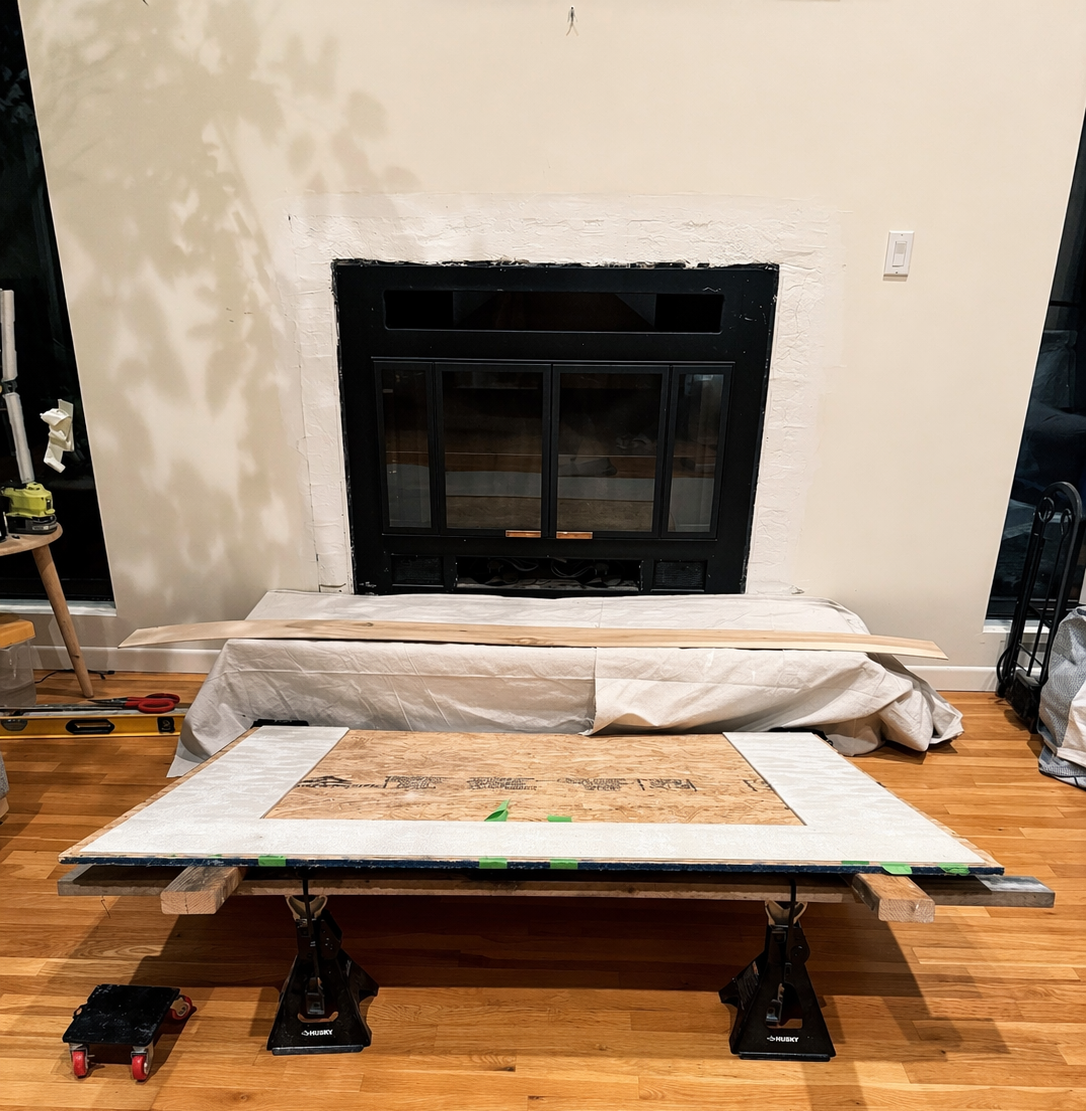
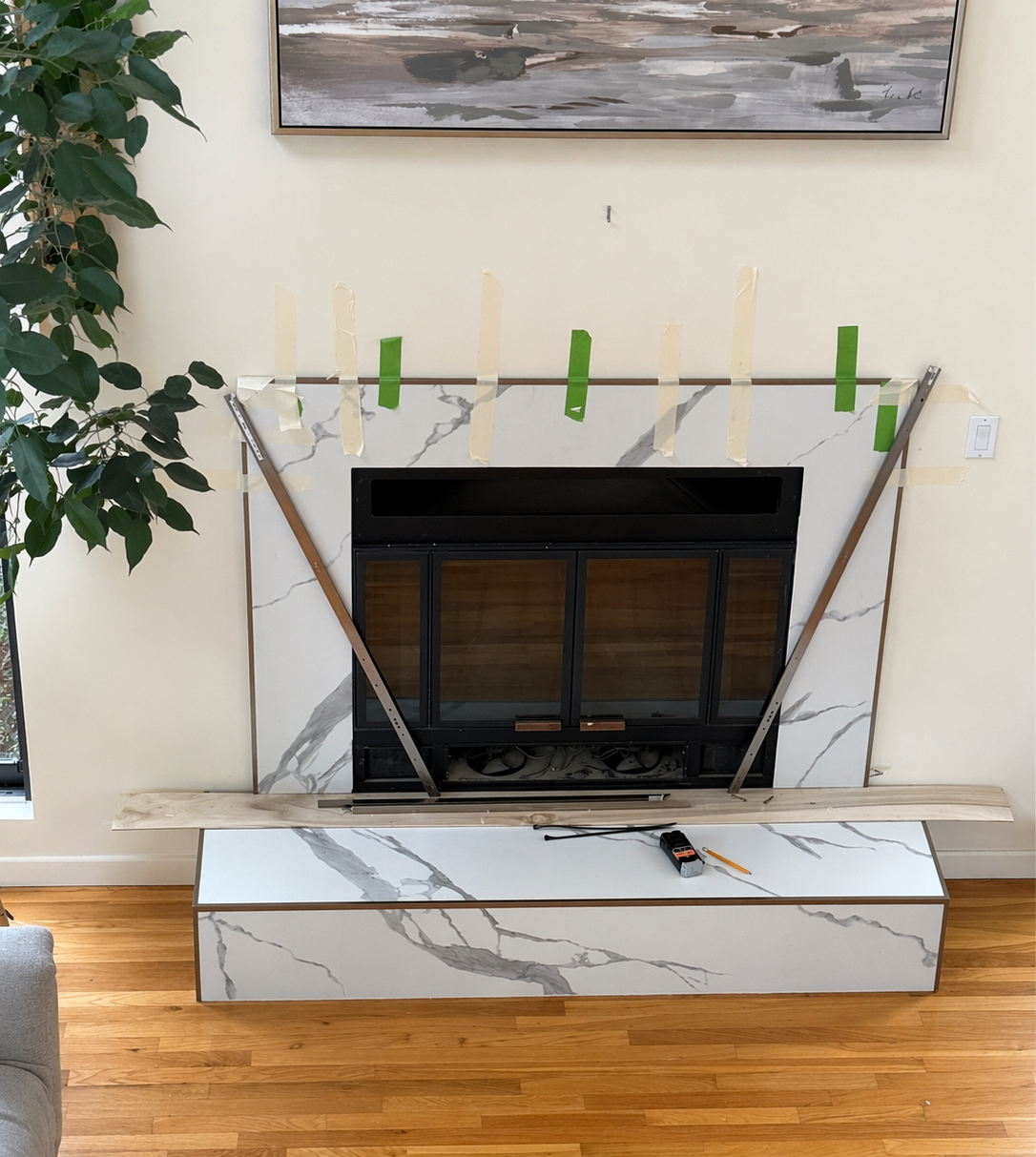
Before and mid-build.
Resurfacing a fireplace is deceptively demanding work. Large-format slabs are heavy, fragile, and intolerant of framing that isn't perfectly flat. The wall has to be prepped and shimmed to within a few millimeters of true before a single piece goes up, because any bow in the substrate telegraphs through the tile and shows in raking light for the life of the installation.
A wall that finally belongs.
Full-height stone from floor to ceiling. A single uninterrupted surface where there used to be a mantel and a shelf and a break. No visible seams between slabs in the primary sight lines — the layout was planned around where a person standing in the room would actually look. The wall reads as one piece of material, not twelve.
The owners were quoted for a fireplace redo. What they got was a focal wall that sets the tone for the room.